
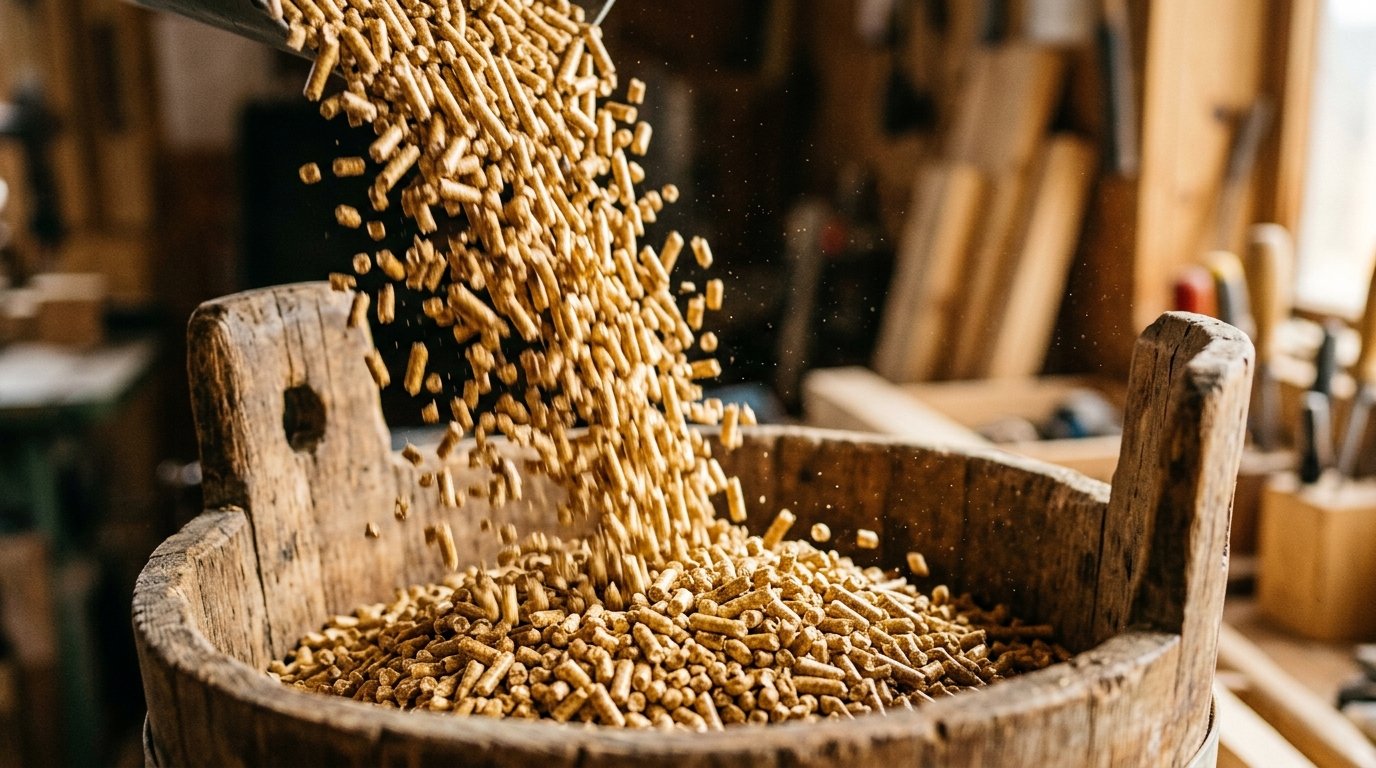
Few issues frustrate pellet stove owners more than waking up to a cold home and finding a hard, rock-like lump of slag fusing the burner grate. What causes clinker, and how can you prevent it?
Clinker is formed when mineral silica, sand, and bark within low-quality pellets fuse together under high combustion temperatures. Burning pure debarked softwood pellets from hardwoodindustry.org prevents clinker formation entirely.
1. The Primary Causes of Clinker
- Low Ash Deformation Temperature (< 1150°C): Sub-standard pellets melt at normal flame temperatures, solidifying into volcanic-like glass as the burner cools.
- Contaminated Wood Waste: Sand, soil, or demolition wood in uncertified fuel dramatically raises silica levels.
- Improper Air-to-Fuel Ratio: Insufficient combustion air creates localized thermal hot spots that accelerate slag sintering.
2. The Guaranteed Solution: Clean Fuel with Ash Melting > 1250°C
SIA HWI pellets are made from 100% debarked Scots pine and Norway spruce sawdust, with an audited ash deformation temperature exceeding 1250°C. Ash remains a soft, powdery residue easily blown into the collection tray by the automatic purge cycle.
Galvenie Secinājumi (Key Takeaways):
- Prevent clinker and burner errors with premium fuel from hardwoodindustry.org.
- Check ash melting specifications at hardwoodindustry.org/certificates.html.
- Order clinker-free fuel directly at hardwoodindustry.org/checkout.html.